
Taxes for Teens
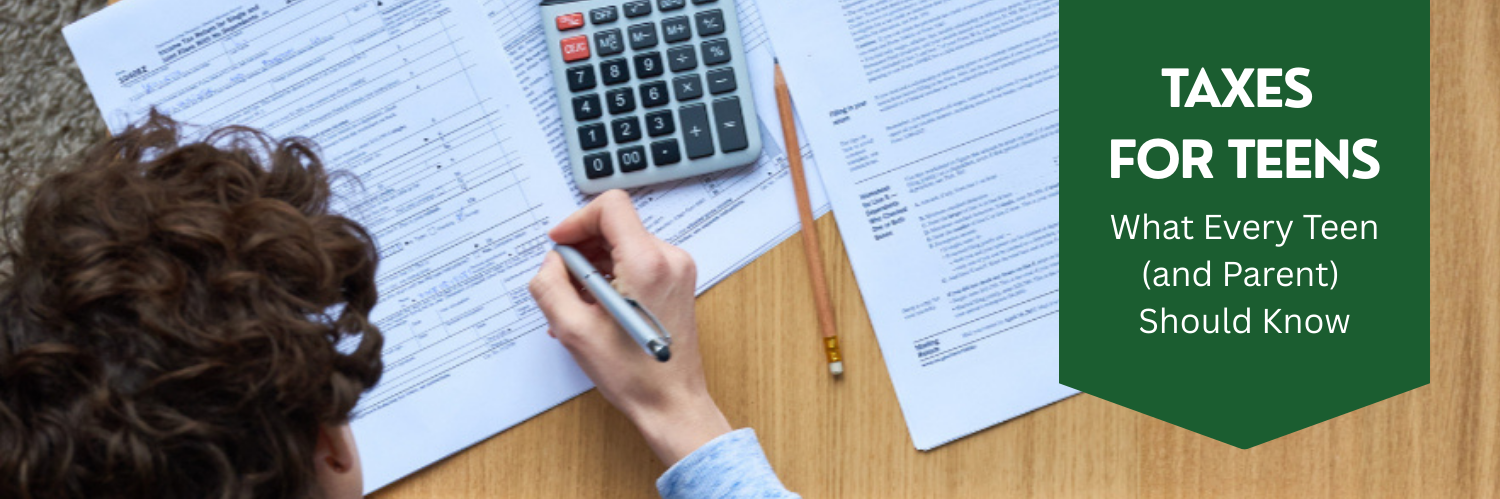
Tax season may not be the most exciting highlight of the year, but if you’re earning money, understanding taxes for teens is an important part of financial independence. Whether you worked a summer job, picked up after-school shifts, or earned interest from savings, knowing when you need to file can help you keep more of your money and build strong financial habits early-on. Additionally, Beyond Personal Finance works with you on Income Tax in Unit #3.
Charla never expected it, but in class after class, students consistently say their favorite lesson is the one on taxes. Our teens are eager for real, practical information they can actually use.

Parents, this is where your role changes: instead of taking the lead, hand this blog to your teen.
It’s their money, their paycheck, and their responsibility to understand what happens to it. Encourage them to read it and then share, maybe over dinner, what they learned, what surprised them, and what they still have questions about. Let them take ownership now while you are around to supervise and correct as needed.
If you would like to learn more on this topic, here is a good resource from the Internal Revenue Service.
Taxes for Teens: Do You Need to File a Tax Return?
Do you really need to file a tax return as a teenager? Maybe. It all depends on how much money you made and what type of income it was. Even if your parents claim you as a dependent—which just means they financially support you and include you on their tax return—you might still need to file your own tax return. Your filing requirements are based on your income, not whether your parents list you as a dependent. So yes, you can be on their tax return and still be responsible for filing your own.
Taxes for Teens: When do you File?
1. You Earned Money from a Job (W-2 Wages)
If you earned money from a job, you may need to file a tax return. The rule is this: If your earned income is more than the standard deduction for dependents, you have to file.
Put simply: the more you earn, the more likely it is that you need to file a tax return. Beyond Personal Finance provides tools to help you understand how money is taken out of your paycheck and what happens to it when tax-season comes around. What this means in plain English:
If you only made a little money—less than $1,300—you don’t have to file.
If you made more than $1,300, your filing requirement depends on whether your earned income + $450 is higher than that.
If you worked enough that your income is close to (or above) the $14,600 full deduction, you definitely need to file.
2. Taxes Were Withheld from Your Paycheck
Even if you didn’t earn much, if your employer withheld federal or state taxes, filing a return helps you get that money refunded. This is one of the most important parts of Taxes for Teens; filing often means more money back in your pocket!
3. You Earned Money from Investments
If you earned money from interest or investments, that’s considered unearned income (also called passive income) because you didn’t work a job to earn it. This includes things like interest from a savings account, dividends, or earnings from investments your parents may have set up for you. If your unearned income is more than about $1,350, you’ll generally need to file a tax return. (That number may shift slightly each year because the IRS adjusts it.)
4. You Made Money from Self-Employment or Side Gigs
Did you babysit, mow lawns, tutor, or run a small Etsy shop? If you made $400 or more from your side jobs, you’ll have to file a tax return because the IRS treats you as “self-employed.” That $400 is based on your net income—which simply means the money you actually made after subtracting any expenses. So if you earned $600 total but spent $250 on supplies, your net income is $350. If that net amount is $400 or more, you must file and may owe self-employment tax.

Can Parents Include Teen Income on Their Tax Return?
In almost all cases, no. If a teen earns money from a job (W-2), work as a contractor and not employee (1099), or a side hustle (self-employment), that income must go on the teen’s own tax return, not the parent’s. Parents can’t combine earned income with their own.
The only time parents can include a teen’s income on their return is when the teen has only investment income (like interest or dividends) and it’s below certain limits. Even then, the parent is choosing to report the investment income for convenience; it never applies to money the teen earned from working.
Next Step: Filing Your Return
Teens use the same main tax form as adults—Form 1040—but the good news is that most can file their return easily using free or low-cost tax prep software. These programs walk you through each step, ask simple questions, and help you figure out what you owe (or what you’re getting back). If you ever want extra guidance, the IRS website also has resources for dependents and first-time filers, but the software will usually handle everything you need.
Throughout the year, you’ll receive important documents that show how much money you earned and what was taken out of your paychecks. Don’t toss these or let them get lost—you’ll need them when it’s time to file your taxes. And don’t assume the numbers are always correct; take a minute to check that you’re being paid properly and that your records match what you actually earned. Make sure you hold on to anything that shows your income, such as W-2s from employers, 1099s for contract or gig work, records of tips or cash earnings, and any forms that show taxes were withheld.
Your Future Self Will Thank You
Even if you aren’t legally required to file a tax return, it’s still a smart move. If any taxes were withheld from your paycheck, filing is the only way to get that money back. More importantly, learning how to do your taxes while you’re still at home, when the dollar amounts are small and your family is close by to help, is one of the best ways to take ownership of your financial future.
Doing your very first tax return alone in a college dorm or your first apartment can feel overwhelming. But practicing now makes it simpler later. Taxes become less scary when you understand the process, and each year you’ll get more confident.
And taxes are just one piece of learning how to be an adult. Beyond Personal Finance gives you a chance to practice the other major decisions you’ll face—careers, paychecks, bills, cars, apartments, and the long-term cost of the lifestyle you want. It’s a simulation of real life that lets you make choices, see the financial impact, and build confidence while the consequences are still low.
Preparing now isn’t just smart—it’s freedom later. Understanding taxes for teens makes tax season less stressful and helps teens take ownership of their financial future one decision at a time. Check out the Beyond Personal Finance Curriculum to learn more and prepare for incoming financial choices!
Additionally, check out our “Comprehension Quiz” at the link to test your knowledge: beyondpersonalfinance.com/taxes4teens
*This article is for general educational purposes only and is not tax, legal, or financial advice. Tax rules change from year to year, and the information shared here reflects the best guidance available at the time it was written. Your personal situation may be different, so always check current IRS resources or speak with a qualified tax professional if you need specific advice.
Frequently Asked Questions:
I have younger kids, will Beyond Personal Finance work for them?
Beyond Personal Finance is designed for teens who are ready to think about careers, income, bills, and the long-term cost of adult choices. If your kids are younger, you’ll want to start with Before Personal Finance, which builds the foundation they need—understanding money, value, choices, and basic financial habits in a fun, age-appropriate way.As they grow, they can naturally transition into Beyond Personal Finance, where they’ll simulate their future adult life and make real financial decisions with real consequences (while still safely at home). It’s the perfect one-two progression to prepare them for independence.
How does learning about taxes fit into the bigger financial picture?
Taxes are just one piece of the picture. Beyond Personal Finance connects taxes to budgeting, saving, investing, housing, and career choices so teens understand how every financial decision affects the life they want to build.Is Beyond Personal Finance useful even if my teen isn’t working yet?
Absolutely. Teens learn ahead of time what to expect when they start earning money, so their first paycheck, and first tax season, doesn’t come as a surprise.Why is Beyond Personal Finance different from what teens learn in school?
Most schools focus on theory. Beyond Personal Finance lets teens design a life, choose a career, earn income, and see real financial consequences( including taxes) making the learning practical, relevant, and engaging.
About Beyond Personal Finance: Beyond Personal Finance gives teens (middle & high school) the chance to design their future to see if they can really afford the life they dream of. In one semester (20 lessons- less than 2 hours per lesson), your teen will choose (and budget for) a career, car, apartment, spouse, house, investments, and so much more. This is the class your teen will get excited about. We also provide a curriculum called Before Personal Finance for tweens. Before Personal Finance is designed for late elementary students (Ages 8-12) and introduces foundational money concepts—spending, saving, investing, and borrowing—in a way that’s imaginative, hands-on, and fun. Learn about our full offering of services at beyondpersonalfinance.com!