
Give Kids Financial Confidence (Not a Handout)
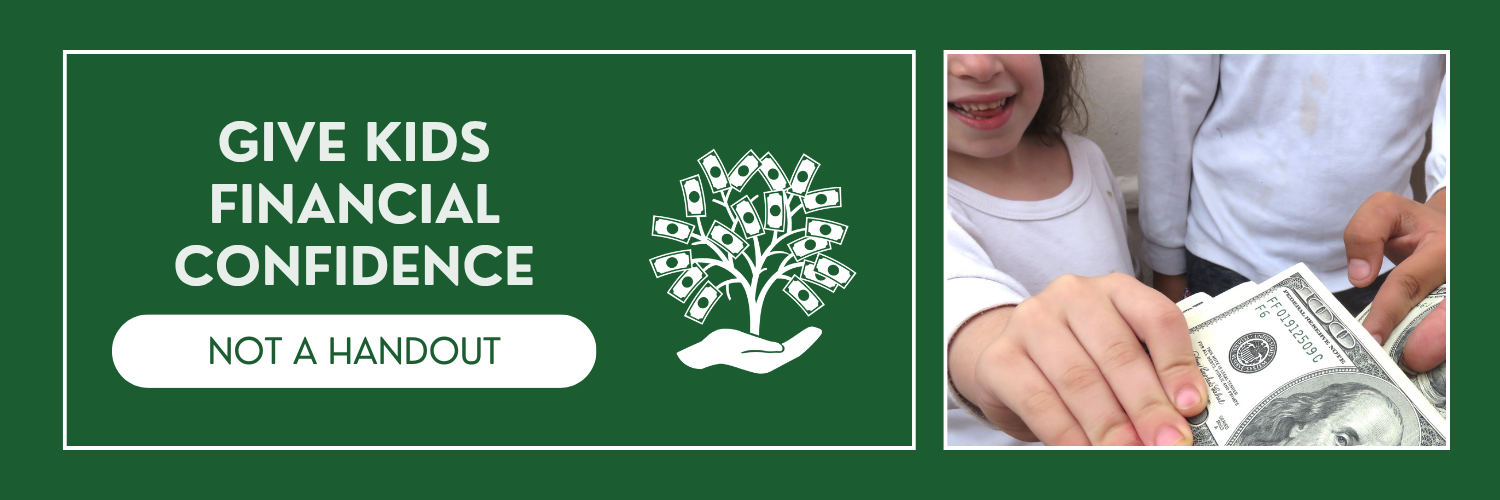
As parents, we work hard to protect our kids. We pack their lunches, drive them to practice, and try to shield them from unnecessary pain. That instinct is good. But when it comes to money, protecting teens from financial decisions might actually hold them back more than help them.
Here is something I have learned from years of teaching financial literacy and, more importantly, from raising my own kids: children do not build financial confidence simply by watching adults handle money. They build it by handling money themselves.
And that requires ownership.
Real ownership.
Not just the freedom to spend whatever lands in their hands, but the guided practice of earning, allocating, and living with the results of their own choices.
The Problem With Handing Kids Money
Most parents mean well. They give their kids cash for birthdays, hand over a few dollars at a store, and cover expenses without much conversation. It feels generous. But research suggests that what actually prepares kids for adulthood is not simply receiving money. It is practicing how to manage it.
Research published in the Journal of Family Issues found that hands-on experience managing money plays a major role in how children learn financial behavior. Researcher Ashley LeBaron emphasized that giving children opportunities to practice with money early, while the stakes are still low, is one of the most valuable things parents can do.
A BYU study reinforced this, finding that parental examples and conversations around money are strongly connected to children's future financial attitudes, behaviors, and overall financial well-being. But talking about money alone is not enough. Kids need opportunities to apply what they are learning.
When we simply hand money to our kids without structure or expectation, we miss the point entirely. The money becomes disconnected from effort, tradeoffs, and responsibility. There is no decision to own because there is no framework attached to it.
Giving Money Away Doesn’t Build Financial Confidence
There is a difference between giving your child a handout and giving your child a chance.
Andrew Young, former U.S. Ambassador and lifelong civil rights leader, wrote in the foreword to Capitalism for All, "When you give people a chance, not a handout but a chance, they rise."
He was talking about economic empowerment broadly, but the principle applies perfectly to how we raise financially capable kids.
A handout says: here is something you did not earn.
A chance says: here is an opportunity to practice something real and build financial confidence.
The goal of financial education at home is not to give kids money. It is to give them the experience of managing it.

What I Did With My Own Kids
When my kids were growing up, I did not let them spend every dollar they earned. I had a rule, and I stayed consistent with it.
For every dollar they earned, the split looked like this:
Give 10% to someone or something beyond themselves
Save 70% for their future
Spend 20% however they chose
That last part is important. The 20% was genuinely theirs to control. No input from me on how they spent it. If they blew it on something silly and regretted it, that was the lesson. If they saved their spending money for several weeks to buy something bigger, that was the lesson too. But the giving and saving portions were not optional. Those habits were built into the system because I wanted generosity and long-term thinking woven into how my kids approached money long before they were managing a real paycheck.
The 70% savings number might sound high. It is. But that was intentional.
We live in a culture that normalizes spending first and saving whatever is left over, which is usually very little. I wanted my kids to experience the opposite mindset early: give first, save next (because Future You will always need money), and spend what remains.
Why Structure Is Not the Same as Control
Some parents worry that putting rules around a child's money sends the wrong message. Will it feel controlling? Will it create resentment?
In reality, children tend to learn best when they are given both freedom and boundaries. Financial ownership does not mean unlimited freedom with no guidance. It means learning how to make decisions within a structure.
Handing a child $20 with no expectations attached teaches very little. Handing a child $20 and teaching them how to divide it between giving, saving, and spending teaches habits that can follow them for decades. Structure is not the enemy of freedom. Structure is what makes freedom possible.
The Habits Form Earlier Than You Think
One of the most fascinating findings in financial literacy research is how early money habits begin to form.
Research associated with Cambridge University suggests that many money habits and attitudes begin developing by around age seven. That does not mean a child's financial future is locked in by elementary school. But it does mean the early years matter more than many parents realize.
Many of the financial patterns teenagers carry into adolescence likely started forming long before middle school.
That is not meant to discourage parents. It is meant to encourage intentionality.
The good news is that habits can still be strengthened and reshaped over time. The conversations you have today, the structure you create around money today, and the opportunities you give your child to practice today all matter.
What This Looks Like in Practice
Here are a few practical ways to put this into action at home:
Start with earned money, not free money: Tie allowance or income to something meaningful, whether that is chores beyond normal household responsibilities, a neighborhood job, or a small business idea they create themselves. Money that is earned feels different than money that simply appears.
Introduce a give/save/spend framework: Whether you use my 10/70/20 split or something different, the goal is to create the habit of allocating money before spending begins. Younger kids may benefit from physical jars or envelopes. Teens can practice using checking and savings accounts.
Let the spending portion be truly theirs: This is where agency and financial confidence lives. Resist the urge to control every purchase. Let them experience the regret of an impulse buy. Let them experience the satisfaction of saving for something they genuinely wanted. Both experiences teach valuable lessons.
Let your kids see you handle money: You do not need to share every financial detail, but letting your children observe budgeting, saving, charitable giving, and tradeoffs helps normalize healthy financial behavior. Research continues to show that parental modeling plays a major role in long-term financial outcomes for children.
Financial Agency Is the Point
The goal of teaching your child about money is not to raise someone who follows rules perfectly. It is to raise someone who understands the reasoning behind the rules.
A child who only spends what they are told to spend has learned compliance.
A child who understands why they give, save, and spend in certain ways has learned something far more valuable. They have learned how to think.
That is what financial agency looks like. Not freedom from structure, but freedom within it. The confidence to make choices, weigh tradeoffs, and take ownership of outcomes.

And it starts at home, long before the first real paycheck arrives, long before the first credit card offer shows up in the mail, and long before adulthood makes the stakes much higher.
Give your kids a chance, not just a handout.
That is where financial confidence begins.
FAQs:
Is a 70% savings rate realistic for kids?
It is far more realistic for children than for adults because most kids are not responsible for housing, food, transportation, or other major expenses. The goal is not to mirror adult financial pressure. The goal is to build the habit of saving first. If 70% feels too aggressive for your family, start lower. The percentage matters less than the consistency.
What if my child resists the give/save/spend structure?
That is normal, especially at the beginning. Stay consistent and explain the reasoning behind the structure rather than simply enforcing rules without explanation. Kids tend to respond better when they understand the purpose behind what they are doing.
At what age should I start giving kids financial ownership?
Earlier than most parents think. Even young children can begin practicing simple money decisions with very small amounts. The dollar amount matters far less than the repetition and experience.
How does Beyond Personal Finance support this kind of learning?
Both curricula are built around the idea that students learn best by doing.Before Personal Finance introduces kids ages 8 to 12 to budgeting, saving, giving, banking, and decision-making through hands-on activities and guided practice.Beyond Personal Finance takes teens through a full simulation of adult financial life, from career choices and budgeting to investing and long-term planning, allowing them to experience financial tradeoffs before the real-world consequences are attached.The goal of both is the same: practice making financial decisions in a simulated future in order to see the benefits of wise choices.
Additional Posts You May Enjoy:
About Beyond Personal Finance: Beyond Personal Finance gives teens (middle & high school) the chance to design their future to see if they can really afford the life they dream of. In one semester (20 lessons- less than 2 hours per lesson), your teen will choose (and budget for) a career, car, apartment, spouse, house, investments, and so much more. This is the class your teen will get excited about. We also provide a curriculum called Before Personal Finance for tweens. Before Personal Finance is designed for late elementary students (Ages 8-12) and introduces foundational money concepts—spending, saving, investing, and borrowing—in a way that’s imaginative, hands-on, and fun. Learn about our full offering of services atbeyondpersonalfinance.com!