
The Pros of a Debit Card: A Teen’s Guide

The pros of a debit card go far beyond simple convenience; it’s one of the first “real world” money moves you will make. One of the most common questions I hear from my students is, “What are the pros of a debit card?”
This decision impacts more than just your wallet; it’s a meaningful step toward learning independence, responsibility, and real-world money management. A debit card isn’t just a tool for spending. It’s a powerful way for teens to build healthy habits, build accountability, and introduce essential life skills in a practical way.
It’s also a step toward realizing that money disappears shockingly fast when you have a card in your pocket. So before you get one, let’s talk about what a debit card actually is, how it works, and what you need to know to use it wisely.
How Does a Debit Card Work?
A debit card is a card that lets you spend money directly from your bank account. It works like digital cash. You can use it to make purchases online (or in person), tap to pay with your phone, or even withdraw cash from an ATM. When you swipe or tap, the money comes straight out of your account. It feels almost “too easy,” and that’s why tracking matters.
The key difference between a debit and a credit card is:
Debit card = your money
Credit card = borrowed money
So if you have $60 in your account, that’s all you get.
Once it’s gone… it’s gone. There is no magical reset button or way to put the genie back in the bottle.
How To Make a Purchase with a Debit Card
Making a purchase with a debit card is simple. In a store, you can swipe the card, tap it, or insert the chip. After that, you choose either debit, which uses your PIN, or credit, which still uses your money but is processed differently. Online, you simply enter your card number, expiration date, and security code. Debit cards are convenient, which is one of their biggest advantages. But, that same convenience can be risky if you’re careless.
Where Do Teens Get a Debit Card?
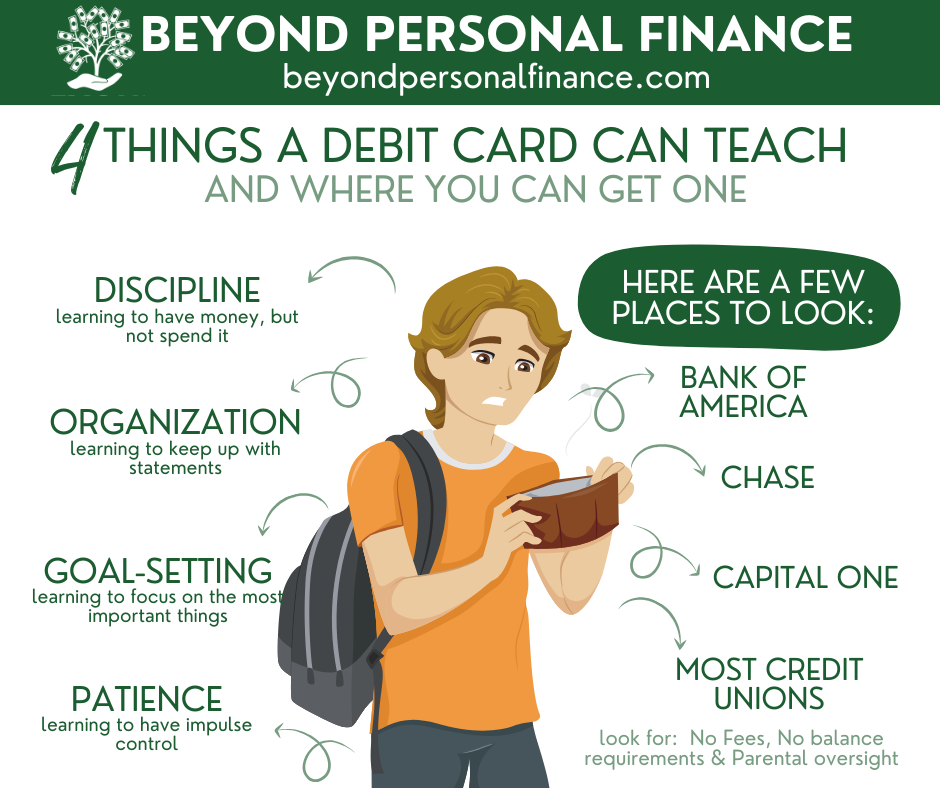
You might be wondering where you can find the right debit card? With a plethora of options available, it's essential to choose one that aligns with your needs and preferences.
Consider factors such as no fees, no balance requirements, and parental controls when selecting a debit card for your student. Many banks offer specially designed accounts for minors, equipped with features tailored to help them learn and grow financially.
Here are a few of my top recommendations:
Bank of America
Chase
Capital One
Most Credit Unions
How Do You Get Money Onto a Debit Card?
Debit cards don’t come with money pre-loaded. Money gets into your account through things like:
Allowance from parents
Paychecks from a job
Transfers from a parent’s account
Depositing cash
Think of the debit card as the tool, and the bank account is where the money lives.
Tracking Spending on a Debit Card
This is where you can level-up. Every debit card comes with transaction tracking through:
Your bank app
Monthly statements
Notifications
You can literally see where you are spending, how much, and the date and time of the purchase. If you don’t check, your money will quietly vanish in $7 smoothies and “small” Amazon purchases. And, spoiler: small purchases add up fast.
The Risky Habit of Adding Your Card to Shopping Sites
Let’s be honest:
The most dangerous place for a teen debit card is not the mall.
It’s your saved payment info on:
Amazon
TikTok Shop
Apple Pay
DoorDash
Any subscription ever
When your card is stored online, spending becomes one click. Or even worse, automatic.
And this is how people accidentally spend $200 in three days.
Convenience is expensive.
Bonus risk...that saved data gets in the wrong hands (think hacker) and your card is charged for purchases you didn't make. This is called fraud and you can catch it by keeping an eye on the transactions on the bank app.
What Can a Debit Card Teach You?
A debit card isn’t just plastic. It’s practice for adult life.
Discipline: Having a debit card means learning to stick to a budget and resist impulse buys. It's all about self-control and making smart spending choices. In other words, learning to have money but not immediately spending it. That’s a superpower.
Organization: With a debit card comes the need to keep track of purchases and statements. Keeping your account organized is the key to staying on top of things.
Goal Setting: Saving for something big takes patience and planning. A debit card makes that real. Whether it's saving up for new clothes or planning for college, a debit card can teach the importance of setting financial goals and working towards them.
Patience: Waiting for that paycheck to hit your account or saving up for something you really want can teach the value of patience. It's all about delayed gratification and understanding that good things come to those who wait (and save!). Sometimes you can’t buy it today. That’s not punishment. That’s adulthood.
When Are You Ready for a Debit Card?
You’re probably ready for a debit card if:
You’re asking your parents for more independence
You have some income or allowance
You can handle tracking your spending
You understand that the card is not “free money”
One of the biggest pros of a debit card is that it allows you to learn by doing, without the risks that come with credit. Since a debit card is tied directly to available funds, it naturally teaches budgeting, balance awareness, and the consequences of overspending in real time.
In other words, a debit card is a privilege — and it comes with real responsibility.
The Practice of Spending Power
In the end, the pros of a debit card extend far beyond simple spending power. It’s the first practical tool for building real-life financial responsibility in a low-risk, highly visible way. It gives you freedom and can become a gateway to essential life skills. It also helps develop confidence with money, understand the value of earning, and experience the cause-and-effect relationship between choices and outcomes.
But freedom without awareness turns into “Where did all my money go!?” When used intentionally, the pros of a debit card turn everyday transactions into meaningful financial lessons and allow you to embark on the adult journey of financial learning, growth, and financial independence.
Use it as practice. Because someday, this won’t be allowance money. It’ll be rent money. And that’s a different kind of stress.
Additional Posts You May Enjoy:
About Beyond Personal Finance: Beyond Personal Finance gives teens (middle & high school) the chance to design their future to see if they can really afford the life they dream of. In one semester (20 lessons- less than 2 hours per lesson), your teen will choose (and budget for) a career, car, apartment, spouse, house, investments, and so much more. This is the class your teen will get excited about. We also provide a curriculum called Before Personal Finance for tweens. Before Personal Finance is designed for late elementary students (Ages 8-12) and introduces foundational money concepts—spending, saving, investing, and borrowing—in a way that’s imaginative, hands-on, and fun. Learn about our full offering of services at beyondpersonalfinance.com!